Customer stories
How CapitalOS built their spend management platform on Increase
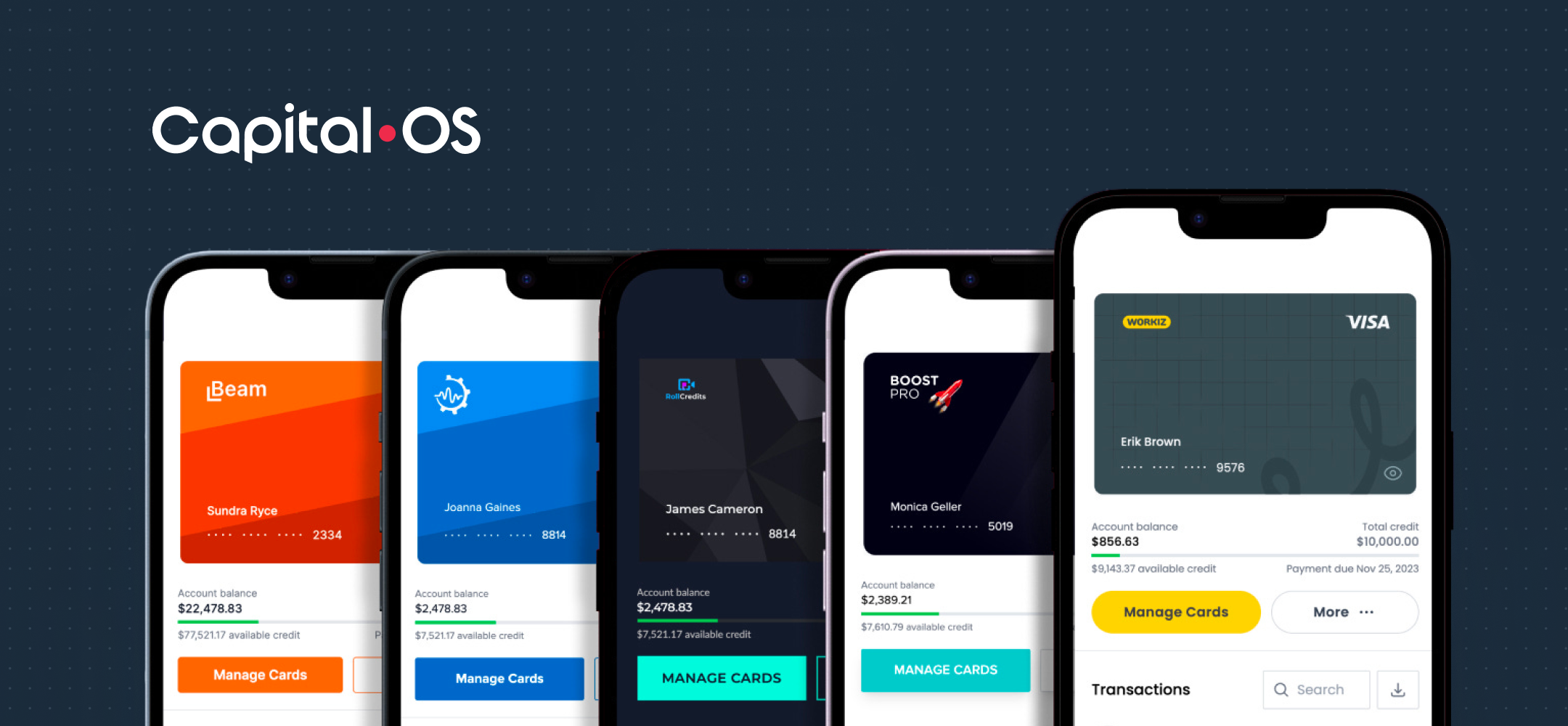
CapitalOS offers embedded spend management solutions for B2B platforms
looking to launch card-based products for their users. As B2B
platforms increasingly become the operating system for small
businesses, they’re uniquely positioned to save time and money for
their users through smart spend management. With CapitalOS, these
platforms can solve this pain point for their users with a single
API call—including embeddable UIs, customized cards, underwriting,
risk, and capital. In doing so, CapitalOS enables platforms to
establish a new revenue stream, increase user retention, and unlock
access to business spending data.
The problem
When CapitalOS set out to build their embedded spend management
solution, they quickly ran into challenges finding partners that
could support both their regulatory and technical requirements. “We
found it difficult to manage multiple layers between infrastructure
providers and the end user.” said Matan Goldschmiedt, CapitalOS’s
co-founder and CTO.
Initially, CapitalOS began searching for two separate infrastructure partners: an issuer processor to facilitate card issuance, and a banking provider to facilitate payments from users. “We talked with many BaaS and card issuer processors, but we just didn’t fit into their pre-existing models,” Matan said. “They wanted to place requirements on our users that didn’t seem relevant.” Partnering with a separate banking provider also meant increased costs and delays in crediting payments. “We either needed to absorb wire fees or accept the credit risk related to delayed ACH payments,” said Matan. All of these factors ultimately increased the complexity of their systems and the cost of capital.
Existing solutions also lacked the customization and transparency that CapitalOS needed. An important part of building an embedded charge card program is being able to provide powerful controls for end users, but this requires granular access to the underlying network data. “It was really important for us to be in the authorization flow, but few providers offered this,” said Matan. This left the team with the difficult tradeoff of either expending significant resources building a direct integration with Visa, or accepting less visibility into their system. “Higher visibility helps lower fraud risk and strengthen differentiation, which ultimately creates a better and more cost effective experience for the businesses we serve.”
Initially, CapitalOS began searching for two separate infrastructure partners: an issuer processor to facilitate card issuance, and a banking provider to facilitate payments from users. “We talked with many BaaS and card issuer processors, but we just didn’t fit into their pre-existing models,” Matan said. “They wanted to place requirements on our users that didn’t seem relevant.” Partnering with a separate banking provider also meant increased costs and delays in crediting payments. “We either needed to absorb wire fees or accept the credit risk related to delayed ACH payments,” said Matan. All of these factors ultimately increased the complexity of their systems and the cost of capital.
Existing solutions also lacked the customization and transparency that CapitalOS needed. An important part of building an embedded charge card program is being able to provide powerful controls for end users, but this requires granular access to the underlying network data. “It was really important for us to be in the authorization flow, but few providers offered this,” said Matan. This left the team with the difficult tradeoff of either expending significant resources building a direct integration with Visa, or accepting less visibility into their system. “Higher visibility helps lower fraud risk and strengthen differentiation, which ultimately creates a better and more cost effective experience for the businesses we serve.”
“Higher visibility helps lower fraud risk and strengthen differentiation, which ultimately creates a better and more cost effective experience for the businesses we serve.”
From Matan’s perspective, the existing options didn’t provide the
autonomy, visibility, or speed needed to build a differentiated
product. “To be successful, we need to provide platforms with a
spend management product that is at least as good as an in house
solution.”
The solution
With Increase, CapitalOS was able to create a customized compliance
program, build a capital efficient funding model, and configure
powerful spend controls based on low-level network data. “Increase’s
approach to tailored compliance, matched with the ways they’ve
verticalized payments and card issuance into a powerful set of APIs,
has been uniquely valuable,” said Matan.
With Increase and our bank partner, CapitalOS established a delegated compliance model that allowed them to perform their own KYB/KYC checks while maintaining strict compliance requirements. “This was a huge paradigm shift for us. It’s enabled us to build our policy in a way that better meets our customer needs,” he said. After aligning on well-considered and regulatory compliant workflows, the team rolled out real-time onboarding for new businesses.
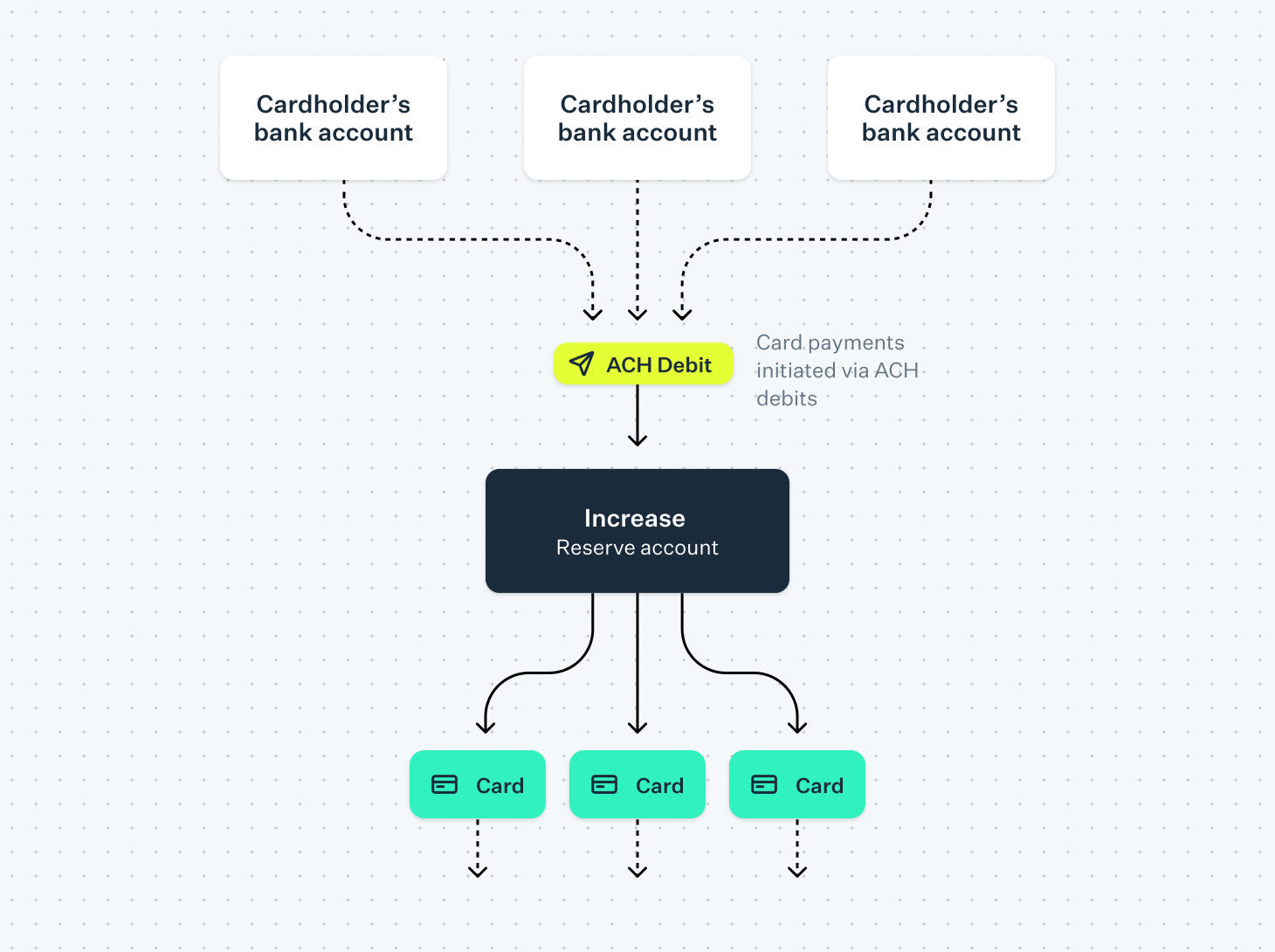
When considering their credit structure, the team also had to determine how to manage reserves and credit payments from the businesses they serve. By using Bank Accounts and ACH Transfers bundled together with Cards, CapitalOS built their entire funds flow on Increase, reducing complexity and cost of capital. “We've been able to turn these savings into novel features for our users, like instant payment credits, which is extremely valuable to cashflow constrained small businesses.”
With Increase and our bank partner, CapitalOS established a delegated compliance model that allowed them to perform their own KYB/KYC checks while maintaining strict compliance requirements. “This was a huge paradigm shift for us. It’s enabled us to build our policy in a way that better meets our customer needs,” he said. After aligning on well-considered and regulatory compliant workflows, the team rolled out real-time onboarding for new businesses.
When considering their credit structure, the team also had to determine how to manage reserves and credit payments from the businesses they serve. By using Bank Accounts and ACH Transfers bundled together with Cards, CapitalOS built their entire funds flow on Increase, reducing complexity and cost of capital. “We've been able to turn these savings into novel features for our users, like instant payment credits, which is extremely valuable to cashflow constrained small businesses.”
The team also uses Increase to issue, customize, and ship physical
cards on demand entirely via the API. “Competitors quoted 6-8 weeks
to get cards in the hands of our customers. With Increase, we can
create and ship physical cards in 1-2 days,” Matan said. With direct
access to the authorization flow, the team is able to approve or
deny any authorization, which provides greater control over fraud.
Additionally, they use low level Visa protocols to build specialized
spending controls for products like Fuel Cards. “When we go to
customers, oftentimes they've evaluated what it means to build this
in-house beforehand. But the speed and depth of control we get with
Increase has been a real differentiator for us. We’re materially
faster than competitors, and can provide a full featured solution
that’s easy for businesses to integrate with.”
“Competitors quoted 6-8 weeks to get cards in the hands of our customers. With Increase, we can create and ship physical cards in 1-2 days.”
The result
Integration with Increase enabled CapitalOS to provide a more robust
card issuance product with greater speed and customization compared
to alternatives. “The engineering expertise and speed with which
Increase moves has been substantial,” Matan said. “We look forward
to continuing to design and build products with Increase as we
scale.”

Products
Developers
Banking products and services are offered by Increase Bank, Grasshopper Bank, N.A., First Internet Bank of Indiana, or Core Bank (each, a Member FDIC bank and a “Partner Bank”).
Technology services are provided by Increase Technologies, Inc., a non-bank.
Where applicable, Visa® cards are issued by the applicable Partner Bank pursuant to a license from Visa U.S.A. Inc.
Eligible deposits held at a Partner Bank are insured by the FDIC up to the standard maximum deposit insurance amount. FDIC insurance protects against the failure of an insured bank only.